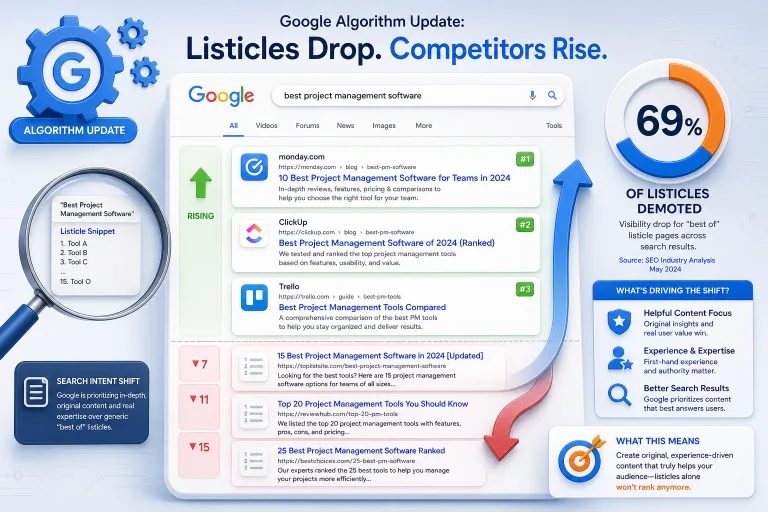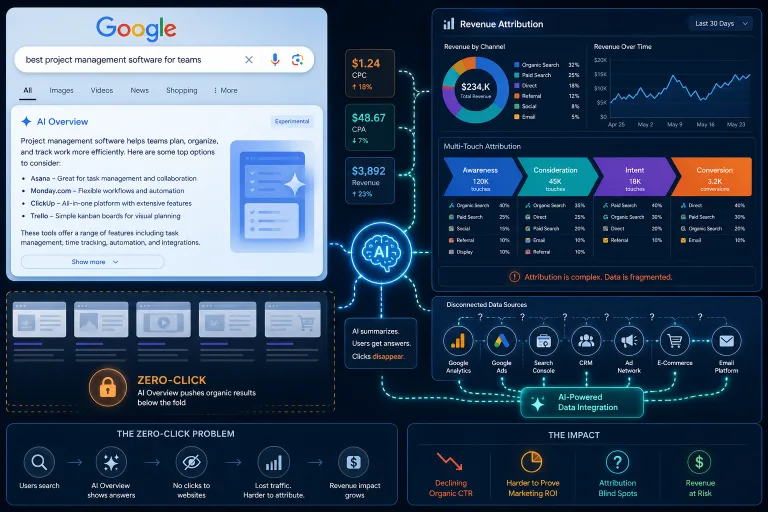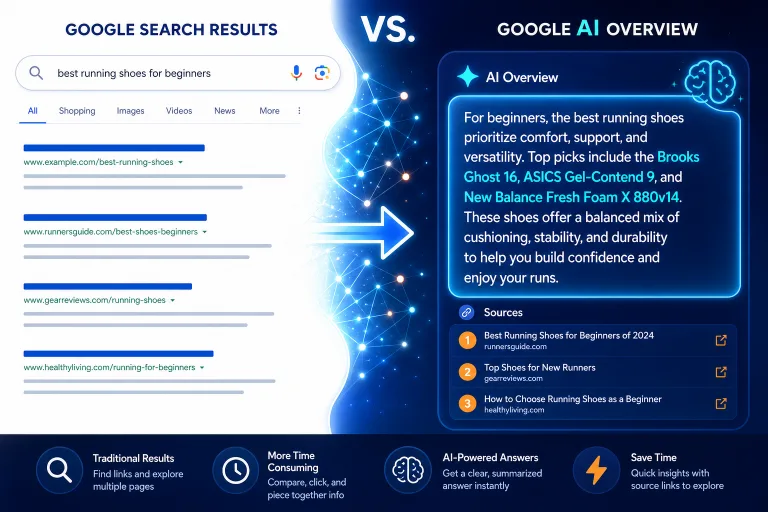
Google Search is changing faster than ever. If SEO used to mean ranking in the top 10 organic results, there is now a new layer of competition: Google AI answers.
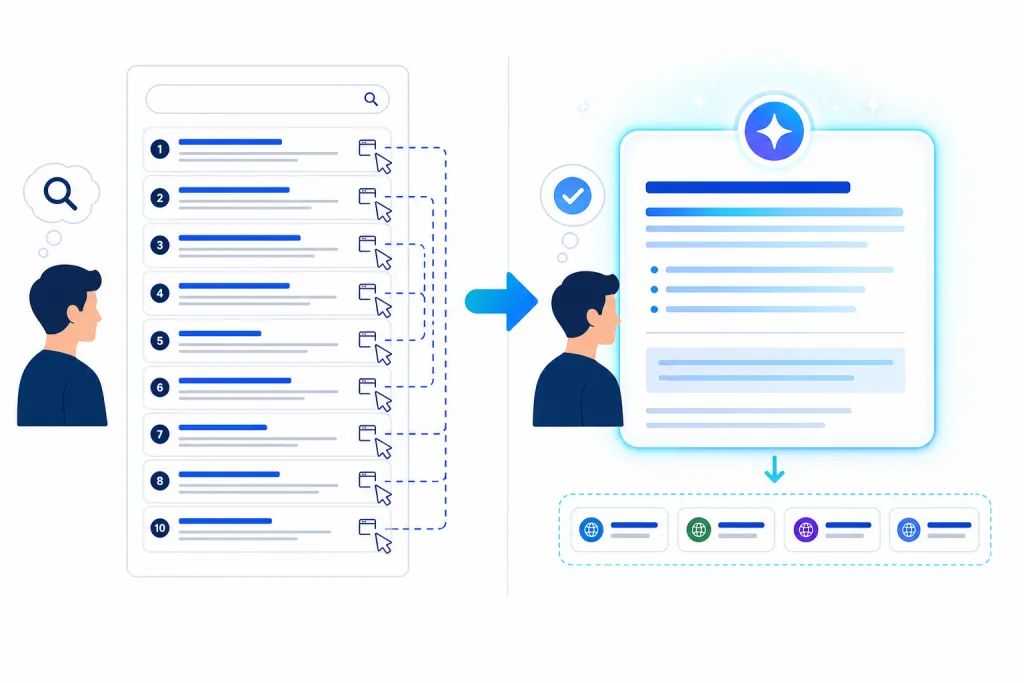
Users no longer always click through multiple sites to gather information manually. Google can show a short AI-generated answer immediately, with links to the sources used to build it. For businesses, media, affiliate sites, and mobile subscription projects, that means you need to rank in classic results and become a source for AI answers.
Let’s look at how this works and what to do to increase your chances of appearing in AI Overviews and AI Mode.
What Are Google AI Answers
Google AI answers are AI-generated blocks in search that give users a concise answer directly on the results page.
For example, a user searches for:
“best traffic sources for mobile subscriptions”
Instead of a plain list of links, Google may show a short explanation of traffic sources for mobile subscriptions, how Google Ads, push, pop, social traffic, and search arbitrage differ, plus links to sites that support the answer.
These answers can appear in several formats:
- AI Overviews — a short AI block in regular Google results.
- AI Mode — deeper AI search where users can ask follow-up questions.
- AI-powered search features — new search formats Google rolls out by country and query type.
Unlike classic SEO, Google no longer just lists links. It analyzes pages, selects information fragments, compares sources, and builds a ready-made answer.
Can You Guarantee Placement in a Google AI Answer?
No. Nobody can guarantee placement in AI Overviews or AI Mode.
Google decides when to show an AI answer, which sources to use, and which links to include. But you can improve your site’s odds of becoming a source.
You need to understand what content AI tends to use most often.
Google does not want keyword-stuffed text. It wants pages that:
- clearly answer a specific question;
- explain the topic better than competitors;
- have a structure that is easy to parse;
- include facts, examples, and definitions;
- are expert but easy to read;
- are indexable;
- build trust.
AI search reinforces classic SEO logic: winners are not those who stuffed keywords, but those who give the best answer.
Why AI Answers Matter for Affiliate Marketing
This matters especially in affiliate marketing because users often search for a solution, not a brand.
For example:
- “how mobile subscription offers work”
- “best GEOs for carrier billing”
- “what is search arbitrage”
- “how to promote mVAS offers”
- “Google Ads for mobile subscriptions”
- “push traffic vs pop traffic”
- “what is PIN submit flow”
These informational queries are ideal for AI answers.
If a site regularly publishes expert content on these topics, it can become a source Google uses in AI blocks. Even without an immediate click, your brand appears next to an expert explanation — building trust and recognition.
For affiliate sites, CPA networks, and mVAS companies, this can become a new organic visibility channel.
What Content Most Often Appears in AI Answers
AI search favors content that helps users understand a topic quickly. These formats work especially well:
- “What is…”
- “How does it work…”
- “X vs Y”
- “Step-by-step guide”
- “Beginner mistakes”
- “Best practices”
- “Market trends”
- “Topic FAQ”
- “Case study with explanation”
- “Tool or channel comparison”
For a blog about Google, affiliate marketing, and mobile subscriptions, consider:
“What Is Search Arbitrage and How It Works”
“Google Ads for Mobile Subscriptions: What You Need to Know”
“How AI Search Is Changing Affiliate Marketing”
“Push vs Pop Traffic for mVAS Offers”
“What Is Carrier Billing and Why It Is Popular in Emerging Markets”
These topics fit AI answers because they address real user questions.
1. Write for Questions, Not Just Keywords
Classic SEO was often built around keywords. AI search focuses on query intent.
Instead of one article titled “Google Ads MVAS,” create content that answers a specific question:
“Can you promote mobile subscriptions through Google Ads?”
Inside the article, cover related questions:
- which Google Ads formats fit;
- moderation risks;
- sensitive verticals;
- why a compliant landing page matters;
- how to analyze traffic quality;
- common mistakes that lead to account bans.
The better you cover the full question cluster around a topic, the more likely Google will treat your page as a useful source.
2. Give a Short Answer at the Top
AI systems can use a page more easily when the first paragraphs contain a clear answer.
For example, an article can start like this:
“Search arbitrage is a model where you buy paid traffic and send users to a search page or search feed, earning from clicks on ads. Profit appears when revenue per user exceeds acquisition cost.”
Then expand with details.
This helps both readers and AI: users get the gist immediately, and Google can see the page matches the query.
3. Structure Content Like a Knowledge Base
AI search understands pages with clear logical structure.
A strong article should include:
- a clear H1;
- a short introduction;
- H2 sections framed as questions;
- lists;
- tables;
- definitions;
- examples;
- FAQ at the end;
- internal links to related articles.
A weak format is a long wall of text without subheadings.
A strong format:
H1: What Is Search Arbitrage
H2: How Search Arbitrage Works
H2: Where Profit Comes From
H2: Which Traffic Sources Are Used
H2: Risks of the Model
H2: How Search Arbitrage Differs from Regular Affiliate Marketing
H2: FAQ
This structure helps Google see exactly which questions the page answers.
4. Add Expertise, Not Just Summaries
AI answers can pull basic information from many sites. To stand out, add what generic summaries lack:
For example:
- real market observations;
- team commentary;
- practical examples;
- GEO comparisons;
- mistake breakdowns;
- mini case studies;
- campaign takeaways;
- funnel diagrams;
- practical traffic source advice.
That is a strength for Kadkon: write not like a generic SEO blog, but as a team that works with traffic, carriers, advertisers, and affiliate partners every day.
For example:
“In mVAS, the prelander often matters more than the offer itself. The same offer can show very different CR depending on source, GEO, flow, and the first screen of the landing page.”
Lines like this add expertise and separate your content from generic AI text.
5. Use Clear Definitions
AI search often answers informational queries, so definitions matter.
For example:
“Carrier billing is a way to pay for digital services through a mobile operator: the user confirms a subscription and the cost is charged to the mobile balance or added to the operator bill.”
Or:
“PIN submit is a flow where the user enters a phone number, receives an SMS code, and confirms the subscription with a PIN.”
Google may use blocks like these as sources for short answers.
6. Add FAQ at the End of Every Article
FAQ is one of the most useful formats for AI search.
FAQ
Can you run mobile subscription campaigns through Google Ads?
Yes, but it depends on GEO, offer type, landing page, compliance requirements, and ad platform policies.
What is better for mVAS: Google, push, or pop traffic?
There is no universal answer. Google can deliver higher-intent traffic, push works well on mass offers, and pop is often used for fast tests and volume.
Why do mobile subscription campaigns often fail moderation?
Issues often involve misleading claims, aggressive creatives, unclear subscription terms, missing price transparency, or difficult unsubscribe flows.
FAQ helps capture long-tail queries and improves odds of appearing in AI-generated answers.
7. Keep Articles Updated
Google AI Search evolves constantly. A year-old article can become outdated quickly.
This applies especially to:
- Google Ads policies;
- AI Overviews;
- AI Mode;
- Search Arbitrage;
- mobile subscription compliance;
- privacy rules;
- tracking;
- attribution;
- ad restrictions.
Add an update date and review important articles regularly.
For example:
“Updated: June 2026”
This signals freshness to users and search engines.
8. Watch Technical Accessibility
Even great copy will not appear in AI answers if Google cannot read the page properly.
Check that:
- the page is indexable;
- there is no accidental noindex;
- robots.txt does not block key sections;
- content is available without heavy JavaScript;
- the site loads quickly;
- mobile version works;
- canonical URLs are set;
- titles and descriptions are clear;
- images have alt text;
- schema markup is used where appropriate.
AI search does not replace technical SEO — it makes it more important.
9. Build Topical Authority
One article rarely makes a site an authority. Google understands expertise better when you have a cluster of related content.

If your blog targets Google + affiliate + mobile subscriptions, you can build clusters like this:
Cluster 1: Google Ads
- Google Ads for Mobile Subscriptions
- How Google Ads Moderation Works
- Performance Max for Affiliate Campaigns
- Google Display Network for mVAS
- Common Google Ads Mistakes in Affiliate Marketing
Cluster 2: Search Arbitrage
- What Is Search Arbitrage
- Search Feed vs RSOC
- How Search Arbitrage Makes Money
- Best Verticals for Search Arbitrage
- Search Arbitrage Risks
Cluster 3: AI Search
- What Are Google AI Overviews
- How to Get Featured in Google AI Answers
- How AI Search Changes SEO
- AI Search and Affiliate Marketing
- How to Optimize Content for AI Mode
Cluster 4: MVAS
- What Is Carrier Billing
- What Is PIN Submit
- Best Traffic Sources for mVAS
- How Prelanders Improve CR
- How to Choose GEOs for Mobile Subscriptions
When these articles are linked internally, the site looks like an expert resource, not a random blog.
10. Do Not Try to Game AI Search
A new SEO mistake is thinking you can trick AI with special phrases, hidden text, or artificial blocks.
That is a bad strategy.
Google is better at detecting useless, mass-produced, AI-generated content. Publishing hundreds of identical AI articles without real value can hurt you.
The right approach is to use AI as an assistant while adding human expertise:
- real examples;
- data from practice;
- unique conclusions;
- specialist commentary;
- clear writing;
- honest disclosure of risks.
In affiliate marketing this matters because topics involve money, ad budgets, and compliance.
Practical Checklist: How to Improve Your Odds in Google AI Answers
Before publishing, check:
- The article answers a specific question.
- A short answer appears in the first paragraphs.
- Clear H1/H2/H3 structure.
- Key terms are defined.
- Practical examples are included.
- The text is easy to read.
- FAQ is included.
- Internal links to related articles.
- The page is indexable.
- Content is updated when the market changes.
- Expert tone, not a generic summary.
- The title matches search intent.
- No misleading claims.
- Terms, risks, and limits are explained honestly.
- The article is useful even without clicking elsewhere.
What to Publish Now
If your goal is AI answers on affiliate marketing and mobile subscriptions, start with educational content.
Topics that often work well:
- What Is Search Arbitrage?
- How Search Arbitrage Works in Affiliate Marketing
- Google Ads for Mobile Subscriptions
- What Is Carrier Billing?
- PIN Submit vs 1-Click Flow
- Best Traffic Sources for mVAS Offers
- How AI Search Changes Affiliate Marketing
- How to Use Google Trends for Affiliate Campaigns
- Push Traffic vs Pop Traffic for Mobile Offers
- How Prelanders Improve Conversion Rate
These articles cover core market questions — the kind that often feed AI-generated answers.
Conclusion
You cannot flip a switch to appear in Google AI answers. It is not a setting or a quick SEO hack.
But you can improve your odds by building an expert knowledge base: clear articles, real user questions, practical experience, solid technical SEO, and regular updates.
For affiliate marketing this is a major opportunity. While many sites still write the same old SEO copy, you can become a source Google trusts when forming AI answers.
In the AI Search era, winners are not those who publish the most. Winners are those who give the best answer.