What Are Prediction Markets and Why Is Everyone Talking About Them?
Prediction markets are platforms where users bet on the outcome of real-world events: elections, sports matches, search trends, and cultural events. Polymarket and Kalshi are the two biggest players in this market, having transformed from niche crypto experiments into mainstream platforms with multi-million dollar volumes over the past two years.
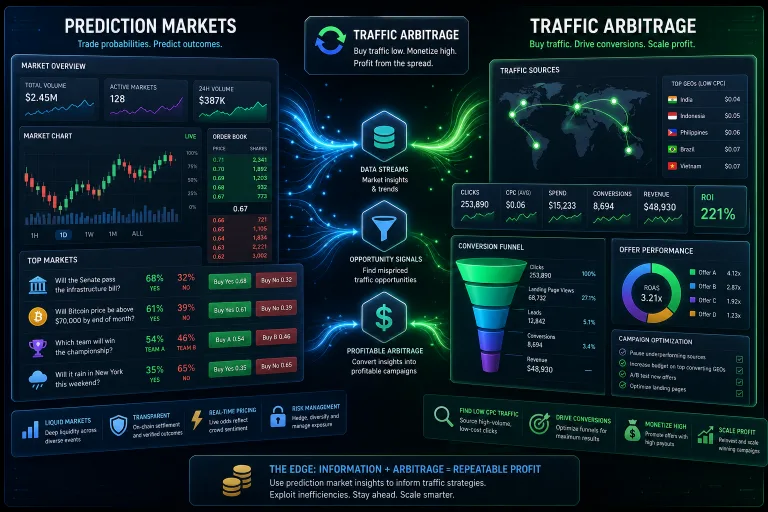
For arbitrageurs and media buyers, prediction markets are interesting for three reasons. First, it’s a new vertical with highly engaged audiences—users who bet real money on event outcomes are eager to click and convert. Second, the platforms themselves need traffic and actively buy it through affiliate programs and influencers. Third, the regulatory gray area creates both arbitrage opportunities and serious compliance risks.
Recent events—a criminal case against a Google engineer, a WSJ investigation into Polymarket’s fake marketing, and Meta’s interest in integrating with prediction markets—make this vertical extremely relevant.
The Polymarket Scandal: What Happened
In late May, US federal authorities charged Google engineer Micaele Spagnuolo with insider trading. He won $1.2 million on Polymarket by betting that musician D4vd and rapper Kendrick Lamar would top Google’s most searched list. The bets won because Spagnuolo had access to confidential company data—he could see search trends before they became public.
This case is the first major precedent where insider information from Google was used to profit on a prediction market. For the arbitrage community, this is an important signal: data that media buyers routinely use for campaign optimization (trends, seasonality, search volume) could be classified as insider information in the context of prediction markets.
Meanwhile, The Wall Street Journal published an investigation revealing that Polymarket ran a covert marketing campaign: paying social influencers to film fake trades and stage large winnings on clone sites to attract new users. This is a classic example of deceptive marketing, long familiar in the affiliate industry through fake reviews and forged screenshots.
How Prediction Markets Advertise Themselves: The Influencer Scheme
According to the WSJ investigation, Polymarket’s marketing scheme worked like this:
- Influencers were paid to create videos showing “winning” bets on Polymarket
- Clone sites (lookalike dummy websites) mimicking the platform’s interface were used for filming
- Large winnings were staged—no real money was bet
- The content was not labeled as advertising
For arbitrageurs, this is a familiar picture. The “fake winning screenshot → clickbait → traffic to offer” scheme has been used in gambling, crypto, and nutra for years. The difference is that Polymarket is a platform valued at hundreds of millions of dollars, not an underground offer from a Telegram chat.
This sets a precedent: if even major fintech platforms use deceptive marketing, regulators will inevitably tighten the rules for the entire vertical. This means prediction market affiliate programs could change terms, block partners, or face sanctions at any moment.
Insider Trading on Polymarket: The Google Engineer Case
The Spagnuolo case is not just a crime story. It directly affects media buyers who work with Google Ads and use Google Trends data, Keyword Planner, and analytical tools to optimize campaigns.
The key question: where is the line between legal use of public data and insider trading? Spagnuolo had access to internal Google data—search trends before publication. But what if a media buyer uses Google Trends, notices an anomalous spike for a specific query, and bets on a prediction market that this trend will continue?
Lawyers do not yet have a definitive answer. But a precedent has been set, and it means:
- Access to internal data of ad platforms (Google, Meta, Amazon) in the context of betting on external platforms could be classified as insider trading
- Using API data that is not yet publicly published is a risk zone
- Arbitrageurs who simultaneously work with Google Ads and trade on prediction markets must separate these activities
Meta and Prediction Markets: New Ad Inventories?
According to the NYT, Mark Zuckerberg instructed the Meta team to explore the possibility of partnering with Polymarket and Kalshi. Details are unknown yet, but potential scenarios include:
- Integrating prediction markets as a feature within Facebook/Instagram
- Placing prediction market ads through Meta Ads
- Creating an affiliate program to drive traffic
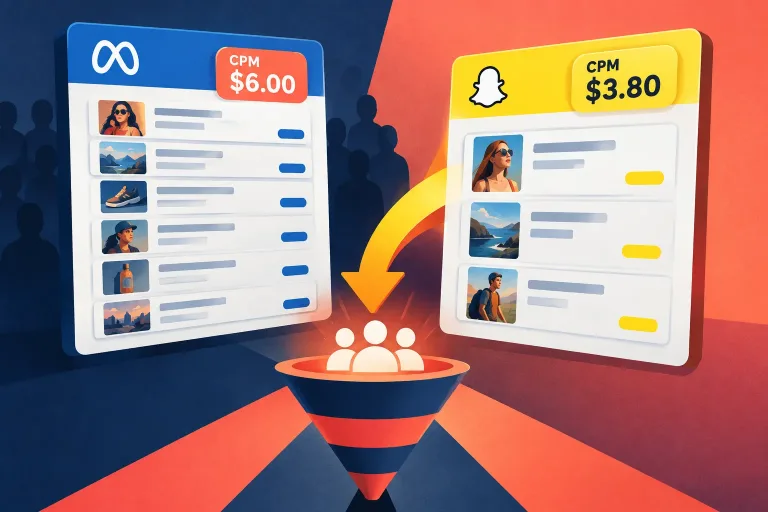
For media buyers, this means the possible emergence of new ad inventory within Meta. If Polymarket or Kalshi get access to Meta’s audience through ad formats, it will open a new traffic buying channel.
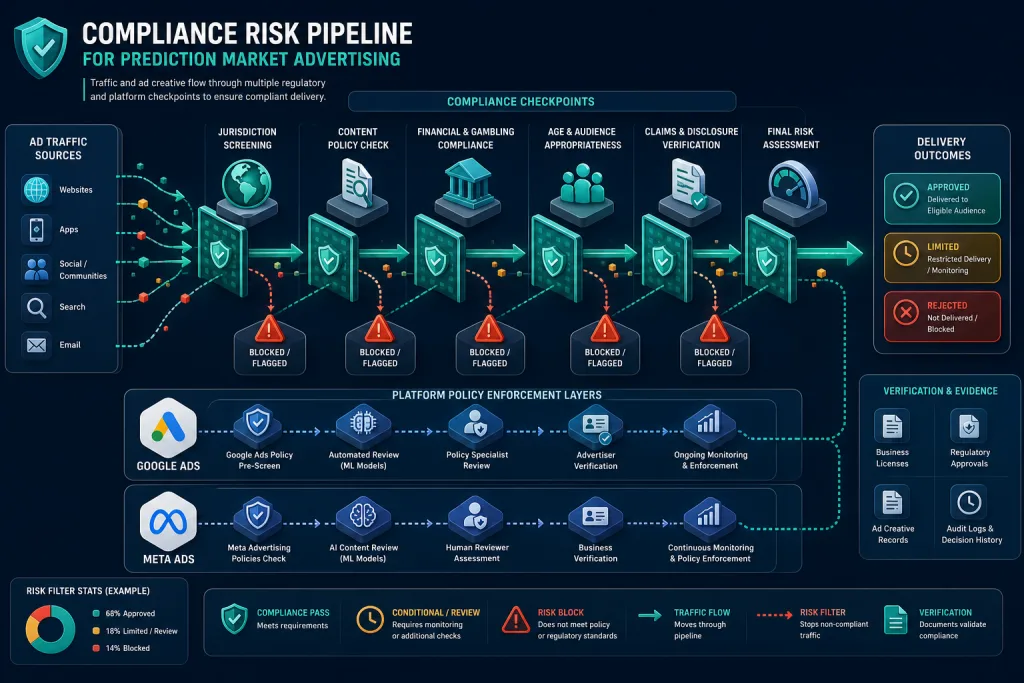
But there’s a catch: regulators are already closely watching prediction markets. The Commodity Futures Trading Commission (CFTC) previously fined Polymarket $1.4 million for unregistered trading. Integration with Meta will inevitably attract even more regulatory attention, which could lead to sudden ad account bans.
Prediction Markets as a Traffic Vertical for Arbitrage
Scandals aside, prediction markets are a potentially interesting vertical for traffic arbitrage. Here’s why:
High audience engagement. Users who bet money on event outcomes are emotionally invested. They eagerly click on content related to their bets—analytics, forecasts, news.
Fresh offers. Polymarket and Kalshi are actively acquiring users and willing to pay for traffic. Prediction market affiliate programs offer CPA for registration and deposit—a model familiar to any arbitrageur who has worked with gambling or fintech.
Low competition. The vertical is still young, and competition for traffic is significantly lower than in gambling, nutra, or crypto. CPC and CPA can be attractive.
GEO. Prediction markets are especially popular in the US, but are also growing in Europe and Latin America. For arbitrageurs looking for fresh GEOs, this is a potential opportunity.
However, there are serious restrictions. In some countries, prediction markets are banned or restricted. Polymarket blocks US users (although they bypass restrictions via VPN), while Kalshi, on the contrary, operates legally in the US as a CFTC-regulated platform. This creates two different risk profiles for arbitrageurs.
Risks and Compliance: What You Need to Know Before Launching
Before launching traffic to prediction markets, it’s important to assess compliance risks:
Regulatory status. Polymarket operates in a gray area—the platform is not registered as an exchange in the US. Kalshi, on the contrary, has CFTC registration. Buying traffic for an unregulated platform can lead to ad account bans in Google Ads and Meta.
Political content. Many markets on Polymarket are tied to elections and political events. Google Ads and Meta have strict rules for political advertising—verification, licensing in some countries, and labeling are required. Buying traffic for political predictions without following these rules is a direct path to a ban.
Deceptive marketing. The WSJ investigation showed that Polymarket itself used deceptive marketing. If an arbitrageur uses similar tactics (fake screenshots, staged winnings), they risk not only their account but also legal consequences.
Age restrictions. Prediction markets are a form of betting, and in many jurisdictions, age restrictions of 18+ or 21+ apply. Advertising without proper age targeting violates ad platform policies.
Comparing Polymarket and Kalshi for Arbitrageurs
| Criterion | Polymarket | Kalshi |
|---|---|---|
| Regulation | Not registered in the US | CFTC registered |
| Currency | Crypto (USDC) | Fiat (USD) |
| Geo-access | Restricted in the US | Available in the US |
| Affiliate program | Yes, informal | Yes, official |
| Ad ban risk | High | Medium |
| Offer type | CPA for registration/deposit | CPA for registration/deposit |
For an arbitrageur looking to minimize risks, Kalshi is a safer choice. Polymarket is attractive for its volume and crypto audience, but the regulatory risk is significantly higher.
How to Launch Traffic on Prediction Markets: A Step-by-Step Approach
-
Platform selection. Start with Kalshi if you work with the US—it’s a legal platform with a lower risk of bans. Consider Polymarket only if you have experience with crypto offers and are ready for regulatory risks.
-
Offer check in Google Ads/Meta. Before launching a campaign, ensure the prediction market landing page does not violate the ad platform’s policies. Political markets are a separate risk zone requiring verification.
-
Targeting. The prediction market audience is usually men aged 25-45 interested in finance, cryptocurrency, sports, and politics. Use interest targeting for these categories.
-
Creatives. Avoid promises of winning, fake screenshots, and staged results. Focus on the “predict and earn” format with a risk disclaimer.
-
Tracking. Use standard trackers (Voluum, RedTrack, Bemob) with postback integration. Prediction market affiliate programs usually support server-to-server tracking.
-
Scaling. After finding a profitable bundle, scale through lookalike audiences in Meta and similar audiences in Google Ads. Monitor changes in the platform’s regulatory status.
Checklist: Launching Traffic on Prediction Markets
- Check the platform’s regulatory status in your GEO (CFTC registration for Kalshi, gray area for Polymarket)
- Ensure the landing page does not violate Google Ads and Meta policies (especially regarding political content)
- Set up 18+ or 21+ age targeting depending on the jurisdiction
- Exclude deceptive creatives: no fake winning screenshots or staged results
- Add a financial risk disclaimer on the landing page and in creatives
- Set up server-to-server tracking via postback URL
- Separate access to internal Google data and bets on prediction markets—these are different activities
The Future of the Vertical: What to Expect
Columbia University economics professor Rajiv Sethi told CNET: “This industry is growing fast and will continue to grow as long as courts and regulators allow it.” This is an accurate description of the current state of prediction markets—rapid growth amid regulatory uncertainty.
For arbitrageurs, this means a window of opportunity that could close at any moment. If the CFTC or other regulators tighten the rules, affiliate programs may be shut down, and ad platforms may ban prediction market ads entirely. Those who enter now will have time to collect profits; those who wait for full legalization may be too late.
Meta’s interest in integrating with prediction markets is a double signal. On one hand, it’s potential growth in inventory and audience. On the other, if Meta integrates prediction markets as a feature, it could cannibalize affiliate traffic: why would a user click an affiliate link if they can place a bet right in Instagram?
The practical takeaway for media buyers: prediction markets are a vertical with a short life cycle in their current form. You need to enter quickly, work carefully, and always have a Plan B in case of regulatory shock.
FAQ
Can Polymarket be advertised on Google Ads?
Right now, Polymarket operates in a regulatory gray area—the platform is not registered as an exchange in the US. Google Ads may reject ads citing financial products policy. Kalshi, on the contrary, has CFTC registration and is more likely to pass moderation. In any case, check Google Ads policies for your GEO before launching.
Does the Google engineer case affect regular arbitrageurs?
Directly—no. Spagnuolo used internal, non-public Google data. Regular arbitrageurs use public tools (Google Trends, Keyword Planner), which is not insider trading. But the precedent creates a risk that regulators will start scrutinizing the “ad platform data—bets on external markets” combination more closely.
How do prediction markets differ from sports betting for an arbitrageur?
Technically, the model is similar—CPA for registration and deposit. But prediction markets cover a wider range of events (politics, culture, economics), not just sports. In addition, the regulatory status of prediction markets is less defined than that of licensed bookmakers, creating extra risks for ad accounts.
Should we wait for Meta’s integration with Polymarket to launch traffic?
It’s too early. Zuckerberg’s interest in prediction markets is just research, not a finished product. If integration happens, it could open new ad inventories and make affiliate programs less relevant. For now, work with existing Polymarket and Kalshi affiliate programs.
What creatives work for prediction markets?
The best performing creatives use the “predict the event outcome and earn” format—without promising guaranteed winnings. Use real events (elections, sports matches, cultural premieres) as a hook. Avoid fake screenshots and staged winnings—this is a direct path to a ban and legal risks.